
When it comes to diagnosing heart disease, accuracy matters. The right imaging test can make the difference between early detection and a missed diagnosis. Two of the most widely used technologies in nuclear cardiology are SPECT (Single Photon Emission Computed Tomography) and PET-CT (Positron Emission Tomography with CT fusion).
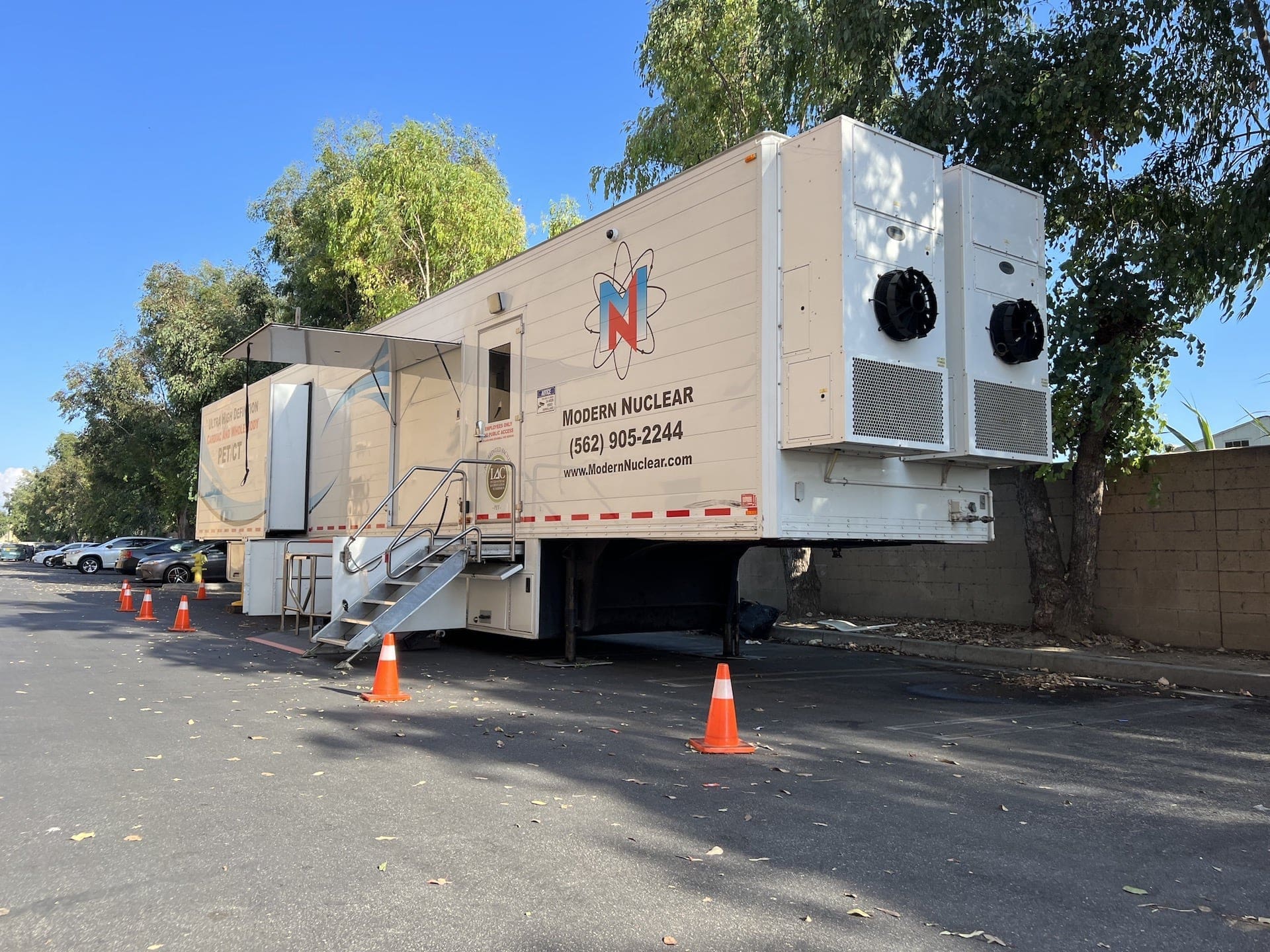
At Modern Nuclear, we specialize in mobile cardiac PET-CT imaging, bringing advanced diagnostic tools directly to hospitals and clinics. But what makes PET-CT such a game-changer compared to SPECT? Let’s dive into the key differences in accuracy, radiation dose, and workflow efficiency.
Accuracy: Why PET-CT Delivers Clearer Answers
One of the biggest advantages of cardiac PET-CT is its superior accuracy compared to SPECT.
- Image Clarity: PET-CT produces sharper, higher-resolution images that make it easier to detect blockages in coronary arteries. SPECT, while reliable, often has limitations due to lower image resolution and potential attenuation artifacts (false signals caused by tissue interference).
- Quantitative Data: PET-CT provides absolute blood flow measurements, allowing cardiologists to quantify coronary flow reserve. SPECT does not typically offer this advanced level of precision.
- Reduced False Positives: Studies have shown PET-CT has greater sensitivity and specificity, which means fewer unnecessary follow-up tests and more confidence in results.
In short, PET-CT offers more reliable answers faster, helping providers make better treatment decisions for their patients.
Radiation Dose: A Safer Option for Patients
Another critical factor in choosing an imaging method is radiation exposure.
- Lower Radiation: PET-CT generally exposes patients to a lower radiation dose compared to traditional SPECT studies. This is particularly important for patients who may need repeat imaging or who are already at risk from cumulative exposure.
- Shorter Scan Times: PET-CT scans typically take less time to complete, reducing patient discomfort and minimizing the overall exposure to radiation.
- Advanced Radiotracers: PET tracers like Rubidium-82 and N-13 Ammonia clear quickly from the body, unlike some of the longer-lived isotopes used in SPECT.
At Modern Nuclear, we prioritize patient safety by offering PET-CT technology that balances diagnostic power with lower radiation risk.
Workflow: How PET-CT Improves Real-World Efficiency
For healthcare providers, workflow efficiency can be just as important as diagnostic accuracy. Here’s where PET-CT shines:
- Shorter Appointment Times: PET-CT scans often take 30–45 minutes, compared to SPECT scans that may take several hours. This means providers can see more patients in less time.
- Mobile Imaging Flexibility: With Modern Nuclear’s mobile PET-CT units, hospitals and clinics can access advanced imaging without needing to build permanent facilities. This reduces costs while improving patient access.
- Fewer Repeat Studies: Because PET-CT is more accurate, there are fewer inconclusive results, which streamlines workflow and reduces delays in patient care.
- Seamless Integration: PET-CT data integrates smoothly into electronic medical records, making it easier for cardiologists to review and share results.
By improving throughput and accuracy, PET-CT helps healthcare systems deliver faster, more efficient care.
Why Modern Nuclear is Leading the Way
At Modern Nuclear, our mission is to make cutting-edge imaging technology accessible to healthcare providers everywhere. With our mobile PET-CT solutions, cardiologists can offer patients world-class imaging without the burden of high infrastructure costs.
Whether it’s about improving diagnostic accuracy, reducing radiation exposure, or enhancing workflow efficiency, PET-CT has clear advantages over SPECT—and Modern Nuclear is proud to bring these benefits directly to your practice.
Conclusion
When comparing cardiac PET-CT vs. SPECT, the differences are clear:
- PET-CT delivers higher accuracy and more reliable results.
- It offers lower radiation exposure, making it safer for patients.
- Workflow efficiency is significantly improved, benefiting both providers and patients.
For cardiology practices looking to stay ahead of the curve, mobile cardiac PET-CT from Modern Nuclear is the smarter choice.
FAQs
1. Is PET-CT always better than SPECT for cardiac imaging?
While both have clinical value, PET-CT typically provides superior accuracy, faster scans, and lower radiation exposure, making it the preferred option for many cardiologists.
2. How long does a cardiac PET-CT scan take compared to SPECT?
A PET-CT scan usually takes 30–45 minutes, while SPECT can take 2–4 hours.
3. Does PET-CT expose patients to more radiation?
No. In fact, PET-CT often exposes patients to less radiation compared to standard SPECT imaging.
4. Can mobile PET-CT units deliver the same quality as in-hospital imaging?
Absolutely. Modern Nuclear’s mobile units are equipped with state-of-the-art PET-CT scanners, ensuring the same high-quality imaging as permanent facilities.
5. Why should a practice choose Modern Nuclear for PET-CT services?
Modern Nuclear provides advanced mobile imaging solutions, enabling practices to access cutting-edge technology without high overhead costs, while ensuring accuracy, safety, and efficiency.

